Metaphors for Translation
So other professions find it kind of easy to describe their professions. Like a doctor, engineer, or teacher can sum it up in one or two sentences. However, a translator finds it hard to do the same.
In today’s translation workshop, we looked at a few metaphors to explain the art of translating, and I wanted to talk about my favorites.
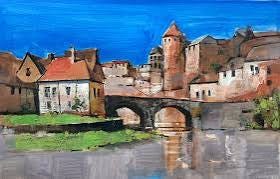
The first one is about a bridge connecting two places. Both places are well populated and have dozens of little houses. There are lots of people on the bridge. So here, the bridge is the connector between two languages, doing the job of a translator. Additionally, all the people in the houses speak different languages, which represent the languages a translator often juggles with.
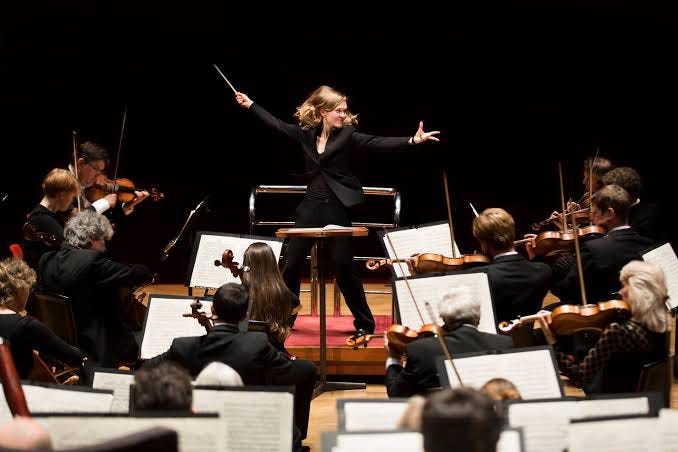
The second one is an orchestra. Okay, so there are multiple different ways of interpreting this one. Firstly, the musicians are the ones interpreting the text - the sheet music. They all see the same things (their source language), and they interpret or translate it in their own way. Then, the music they produce on their individual instruments is the translated text. An alternate way is to call the conductor the translator and the musicians the text that they are manipulating. The music here becomes the translated text again.
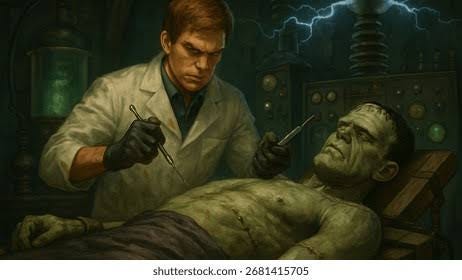
The third image is of Frankenstein’s monster. This one is actually easier. The scientist is the translator, the electricity is the process of translating, and the monster is the text that people then see and read and react to.
So, the point of this post is to basically show everyone that translation isn’t boring. It can be looked at in fun ways and made interesting.


Comments
Post a Comment